.svg)

Michael Jackson is widely regarded as one of the greatest artists to ever live.
He broke records. He sold hundreds of millions of albums. He became a global cultural icon.
But even with all the fame, money, and milestones, he understood something most artists eventually learn too late.
He was playing someone else’s game.
The labels controlled the masters. They controlled the publishing. They controlled the leverage. Talent made you famous. Ownership decided who stayed wealthy.
And Michael made one move that didn’t just change his career.
It reshaped how artists think about power in music.
In the late 1960s, The Jackson 5 were young kids selling millions of records under Motown Records. The machine was powerful. Motown controlled the branding, the songwriting, the production, and the image. It was polished. It was historic. And it worked.
But it also meant control stayed at the top.
At just twelve and thirteen years old, the brothers were generating massive revenue while reportedly earning around 2.7% in royalties and owning none of the songs they performed. As Berry Gordy expanded his empire, the artists building it had no ownership stake in it.
Michael noticed early.
He realized fame without leverage is fragile.
The first shift came in 1976 when the group left Motown and signed with Epic Records. Their royalty rate reportedly jumped from 2.7% to roughly 20%. Nearly eight times more than before.
It was progress.
But it still wasn’t control.
For Michael, success wasn’t just about topping charts. It was about changing the structure of the deal.
While recording Thriller in 1982, he renegotiated his contract. Instead of accepting the industry standard, he secured roughly $2 per album sold, around four times what most artists were earning at the time. Thriller would go on to sell more than 65 million copies worldwide, becoming the best-selling album in history and generating enormous personal income for him.
It was a massive financial win.
But he still didn’t own his masters.
The real turning point came after conversations with Paul McCartney about music publishing. McCartney explained how owning songs, not just performing them, creates long-term wealth. Publishing pays every time a song is played, licensed, streamed, or sampled.
Michael listened.
Soon after, ATV Music Publishing went up for sale. Inside ATV was the publishing catalog of The Beatles, one of the most valuable collections of songs in history.
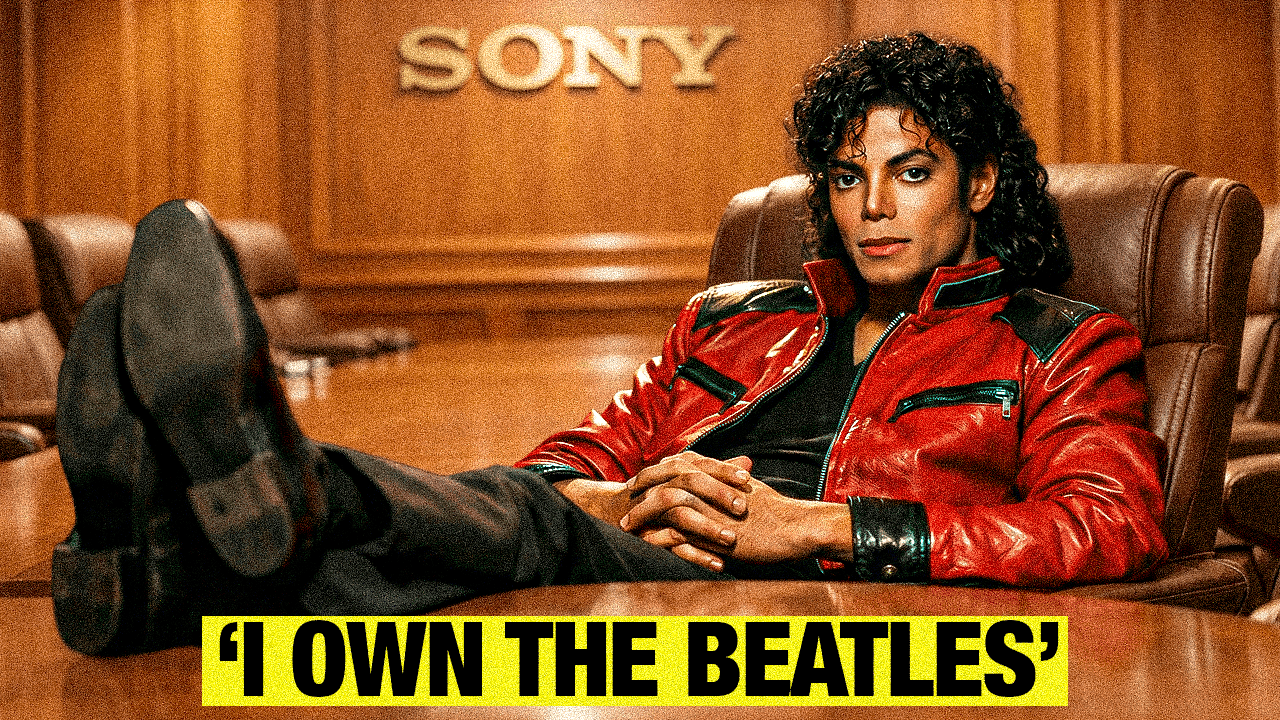
In 1985, Michael bought ATV for $47 million.
With that move, he shifted from artist inside the system to owner of one of the most powerful music catalogs in the world. Every time a Beatles song played on radio, appeared in a film, or was used in a commercial, revenue flowed back to him.
He wasn’t just making hits anymore.
He owned history.
In 1995, he merged ATV with Sony Music Entertainment to form Sony/ATV. This positioned him not just as an artist signed to a major label, but as a strategic partner alongside one of the largest corporations in music.
It was a full-circle moment. The child who once watched executives control everything around him was now negotiating from a position of leverage.
That leverage became visible in 2001 when he publicly criticized Sony and its president Tommy Mottola over the promotion of his album Invincible. Most artists would never risk that. Challenging the label that controls your budget and distribution can end a career.
But Michael wasn’t dependent in the same way.
Even if album sales slowed, the publishing checks continued. Ownership insulated him.
The industry took notice.
Royalty rates for top artists began rising from the traditional 10–15% range to 25–35% for superstars. Publishing splits, master ownership, equity stakes, and reversion clauses became central negotiation points instead of afterthoughts. Artists began launching their own labels and structuring distribution partnerships.
Dr. Dre built Aftermath after leaving Ruthless and Death Row. Prince publicly fought Warner Bros. Records for control of his masters. Jay-Z, Kanye West, and Drake followed with their own imprints and ownership structures.
The culture shifted from chasing advances to building equity.
Catalogs became long-term financial assets, not just creative output.
Even during financial strain later in his life, Michael’s publishing stake remained one of the most valuable assets in music. After his passing in 2009, his estate eventually sold its remaining stake in Sony/ATV for billions of dollars.
From a child earning 2.7% to controlling one of the most powerful publishing portfolios in modern history, Michael Jackson transformed his relationship with the industry that once dictated his terms.
He didn’t just change music.
He changed who controls it.

%20(1).jpeg)


.png)
.png)
.png)