.svg)

IKEA was founded in 1943 by Ingvar Kamprad in Sweden. In the beginning, it had nothing to do with furniture at all. Kamprad was selling small household goods, cups and plates, the kinds of things you could pick up and move on from quickly. Furniture came later, as demand grew and the business needed somewhere new to go.
What followed was a decision that looked almost unremarkable at the time. Instead of selling furniture already assembled, IKEA would sell it flat. Packed into boxes. Customers would take it home and build it themselves.
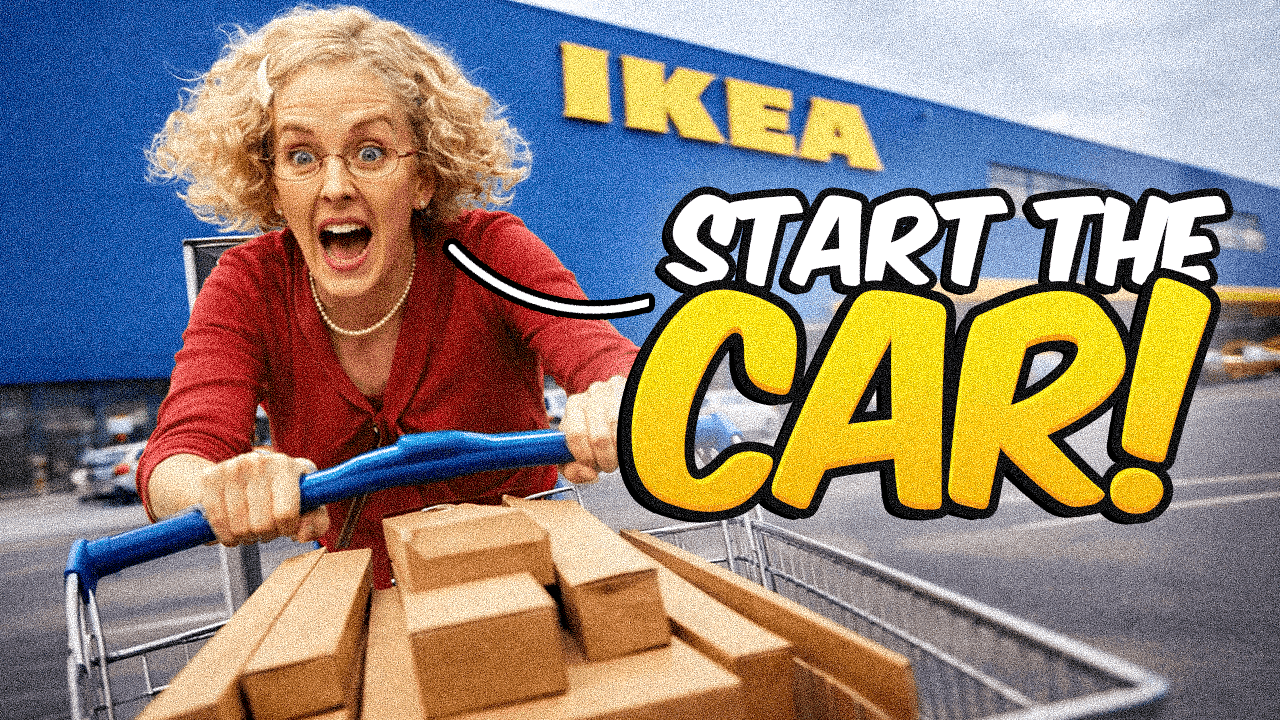
The idea didn't come from a boardroom or a strategy session. It came from Gillis Lundgren, one of IKEA's first employees, who found himself trying to fit a table into his car and couldn't. He unscrewed the legs, laid the pieces flat, and drove home. That small frustration quietly became the foundation of a global empire.
Flat-packed products take up to 70% less space than pre-assembled pieces, which saved IKEA billions in logistics costs and allowed them to pass those savings on to customers. But the more interesting consequence wasn't financial. It was psychological.
When Effort Becomes Attachment
When people built the furniture themselves, the furniture stopped being just furniture. The time spent, the instructions followed, the small sense of accomplishment at the end — it changed the relationship between the person and the object. The product felt like it belonged to them in a way that buying something off a shelf never quite managed.
Psychologists have a name for this. It's called the IKEA effect, a term coined by researchers Michael Norton, Daniel Mochon, and Dan Ariely from Harvard, Yale, and Duke. In their experiments, people were willing to pay up to 63% more for furniture they had assembled themselves compared to identical pre-built items, simply because they had put in the effort.
Effort creates ownership in the mind before ownership is even official. IKEA had stumbled into this without fully intending to, and then learned to build everything else around it.
Building the Store Around the Same Idea
As IKEA expanded and opened physical stores, they started thinking about how to extend that same sense of involvement into the shopping experience. The answer wasn't to make things faster or more efficient. It was to slow everything down.
They built stores around a single winding path that moved customers from one fully designed room to the next. Kitchens, bedrooms, living rooms. These weren't displays in the traditional retail sense. They were complete environments that felt lived in, like you'd walked into someone's home by accident.
The goal was to get people imagining. Without realizing it, shoppers would start mentally placing the couch they were looking at in their own living room. The table in their kitchen. The bed in their bedroom. The longer that imagined picture held, the more real it became. And the more real it felt, the harder it was to leave empty-handed.
Even the café wasn't accidental. IKEA started selling food because shoppers would leave around lunchtime and, more often than not, wouldn't come back. Affordable meals kept people inside. People who ate at IKEA restaurants have been shown to spend around 23% more on furniture and home goods. IKEA now serves around 800 million meals a year, and over a billion Swedish meatballs. The restaurant is not a side business. It's part of the machine.
Customers who spend 90 minutes or more inside IKEA are far more likely to make multiple purchases than those who browse for less than 30 minutes. They designed wider spaces and family-friendly areas, anything that made it easier to stay without feeling rushed.
Even the Names Were Intentional
Kamprad had dyslexia, which made product codes and number sequences difficult to work with. So IKEA used Swedish words instead, real names, town names, lakes, rivers. What started as a personal accommodation gave the brand a personality that felt warm and slightly strange in a way that stuck. You remember BILLY. You don't remember SKU 4892B.
What It All Added Up To
By the time a customer reached the warehouse floor at the end of their visit, the decision had usually already been made. They'd seen the product in a room that felt like their room. They'd imagined it at home. They'd spent time with it. Walking out with the flat-packed box wasn't really shopping anymore. It felt like the last step of something they'd already started.
Individually, none of these things looked like a master plan. The flat pack, the winding path, the showrooms, the café. But together they compounded into something that changed not just how IKEA sold furniture, but how the entire industry thought about selling it.
Flat-pack is now everywhere. Showrooms are standard. In-store dining has become a real consideration for large retailers. The logic IKEA built around effort, imagination, and time has quietly become the logic of modern retail.
IKEA didn't just lower the price of furniture. They changed what the act of buying it actually felt like. And that, more than any store layout or pricing strategy, is what made them impossible to replicate.


%20(1).jpeg)


.png)
.png)
.png)